Your Guide to VA Home Loan Benefits
Whether you’re a veteran, active-duty service member, or military family, get expert guidance from eligibility to closing and make the most of your VA benefits.
Meet The Veteran Mortgage Wingman
Mark Clark is a civilian benefit and certified VA loan specialist . VA loans are incredibly powerful but also widely misunderstood. His job is to cut through bad advice, explain the rules clearly, and make sure veterans and active-duty service members actually receive the full benefit they’ve earned.Mark is known as the Veteran Mortgage Wingman here to serve, advocate, and help VA buyers avoid costly mistakes from contract to closing and beyond.
Whether you're a veteran purchasing your 3rd home on your VA benefit or PCSing and a first-time homebuyer, our team has you covered.
Education is central to how Mark does that, including teaching VA-focused classes for real estate professionals so VA buyers are better represented throughout the transaction.Outside of work, Mark is married, a proud father of six, and loves to play racquetball and pickleball.
Mark also serves as the the Board Chair for Genesis Joy House, Georgia’s only all-women Veteran homeless shelter because serving those who served doesn’t stop at the closing table.
The Home Loan Process
Mortgage Pre-Approval
Get pre-approved from one of our Loan Officers to see how much you can afford.
House Shopping
Work with a trusted Real Estate Agent to find a home you would like to move into.
Loan Application
Complete your home loan application to get the lending process started.
Don't take my word for it
Mortgage Programs
Experience the best mortgage experience located in Braselton, Georgia.
Home Loan Options
Our experienced mortgage advisors will walk you through the best mortgage loan program that will fit your specific scenario.
Conventional Home Loans.
FHA Home Loans.
USDA Home Loans.
VA Home Loans.
Frequently Asked Questions
How often can I refinance my mortgage?
There is no limit to the number of times you can refinance. However, you must qualify every time you apply and there will be costs associated with closing the loan each time.
Can I buy a home if I do not have money for a down payment?
Yes! There are a number of bond programs that offer low or no down payment financing options.
How do I know which mortgage is right for me?
The key to choosing the right mortgage is to understand the range of options and features available to you, as well as your budget, circumstances, and goals. Our licensed mortgage professionals are here to help you navigate that process. The more you know, the more comfortable and confident you will be choosing the best option for you and your family.
How long will the loan process take?
The Truth in Lending Act (TILA) does not permit a lender to close a loan until at least seven (7) business days have passed from the date your application was received. A typical home loan takes 30 days, as a number of third-party services such as appraisals, title work, and credit are required in conjunction with the mortgage process. Once you familiarize your Loan Officer with the details of your specific loan scenario, they will be able to provide you with a more specific timeline.
Will I qualify for a home loan?
The only way to find out is to speak with a qualified mortgage professional. Our Loan Officers have helped numerous clients who didn’t know if they could qualify to become home owners. We take the time to understand your financial situation and long-term financial goals, and then match you with the loan program that best fits your needs. Your approval for a loan may also largely depend on the price of the home you are financing. Getting pre-qualified prior to beginning your home search can give you an idea of what you may be able to afford.
Why do people refinance their mortgages?
Homeowners typically refinance to save money, either by obtaining a lower interest rate or by reducing the term of their loan. Refinancing is also a way to convert an adjustable loan to a fixed loan or to consolidate debts.
How much money will I have to pay upfront to buy a home?
This question does not have a simple, one-size-fits-all answer. The exact amount will depend on the price of the home you buy as well the type of mortgage financing you choose. Depending on your loan program, your down payment could be as much as 20% of the home’s price or as little as 3%, while some loans require no down payment at all.
Can I get a mortgage after bankruptcy?
You may still qualify for a home loan even if you have experienced a bankruptcy. The best way to find out if you qualify is to talk with a Loan Officer to discuss your options. Be sure to bring all paperwork regarding your bankruptcy so your Loan Officer can find the program that best fits your situation.
Should I lock my interest rate now, or wait until we are closer to our closing?
Interest rates fluctuate all day, every day. If an interest rate is good, it may be in your best interest to lock now. If you wait, you run the risk of an increase in rates later. If you are concerned that rates may go down after you lock, contact your Loan Officer to discuss your options. Some programs allow you to lock for an extended period and choose to lower your rate should a better one become available.
Most Recent Blog Updates
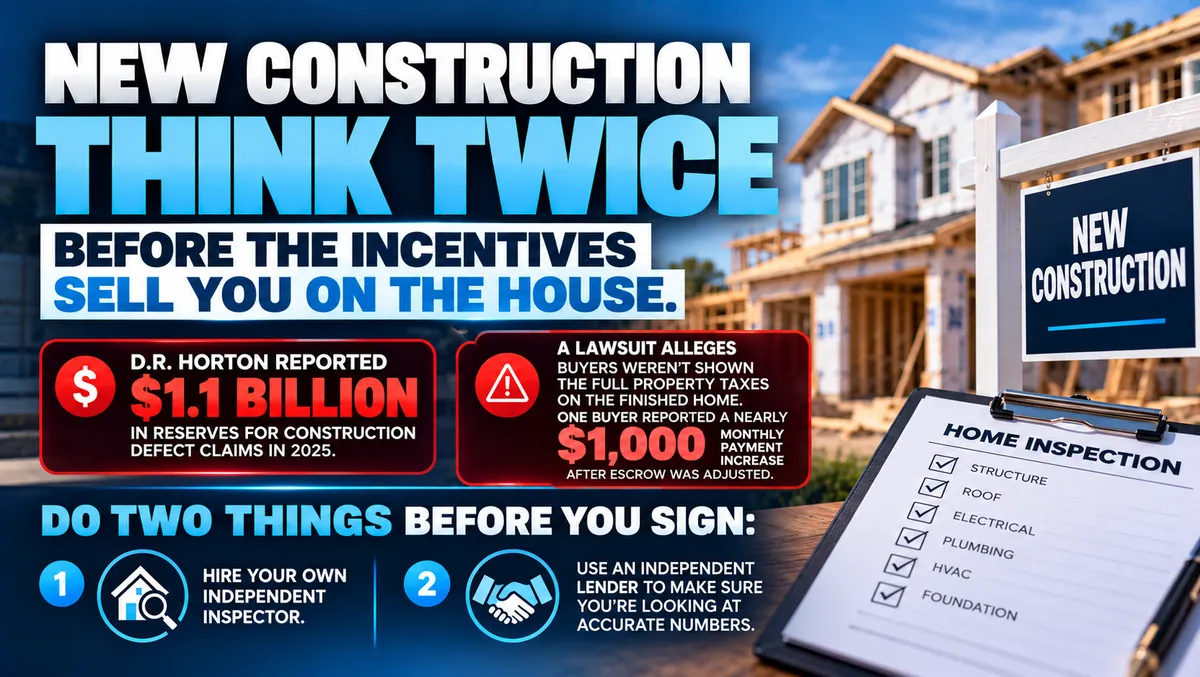
New Construction Incentives Look Great Until You Read the Builder Contract and Here Is What to Know First
The Incentives Are Real but They Are Not the Whole Story
Lower rates. Closing cost assistance. Upgrade packages. New construction incentives can be genuinely compelling and in the current market builders are offering them more aggressively than they have in years. Mark Clark wants buyers who are drawn to those incentives to look at the complete picture of what they are buying before the contract is signed.
What the Industry Data Is Showing
D.R. Horton reported approximately 1.1 billion dollars in reserves for construction defect claims in 2025. That number reflects the scale of warranty and defect issues that large production builders are managing across their portfolio. Most builder contracts stipulate that repairs are made at the builder’s discretion which means the buyer’s ability to demand specific remedies is significantly more limited than it would be in a standard home purchase with a negotiated inspection contingency.
A separate lawsuit has alleged that buyers were not shown the full property tax burden on finished homes before closing. One buyer reportedly saw their monthly mortgage payment jump by nearly a thousand dollars after the escrow account was adjusted to reflect the actual tax obligation on the completed property rather than the estimates presented during the sales process. That is not a minor adjustment and it is the kind of surprise that a buyer working exclusively with the builder’s preferred lender and the builder’s in-house information may not see coming.
Two Things to Do Before the Incentives Sell You on the House
Hire an independent inspector rather than relying solely on the builder’s quality control process. A third party with no relationship to the builder and no incentive to minimize findings will give you an honest assessment of what you are buying before you are legally committed to buying it.
Use an independent lender like Mark Clark rather than the builder’s preferred lender. Builder-affiliated lenders have a natural alignment with completing the transaction and their incentives may not always point toward giving the buyer the most accurate and complete payment picture. An independent lender will make sure the numbers you are looking at including the full property tax obligation reflect what you will actually be paying after closing rather than what makes the deal look most attractive during the sales process.
The Bottom Line
Lower rates and incentives are only good if the home is worth living in and the payment you agreed to is the payment you actually make. Looking at the whole deal before signing means understanding both sides of the transaction not just the incentives the builder is promoting.
Reach out to Mark Clark with any questions before you sign a new construction contract.
Sources
ConsumerFinancialProtectionBureau.gov
MortgageNewsDaily.com
NAR.realtor
FannieMae.com
Investopedia.com

Mortgage Calculator
See your total mortgage payments using the tool below.
| Year | Interest | Principal | Balance |
|---|