Your Guide to VA Home Loan Benefits
Whether you’re a veteran, active-duty service member, or military family, get expert guidance from eligibility to closing and make the most of your VA benefits.
Meet The Veteran Mortgage Wingman
Mark Clark is a civilian benefit and certified VA loan specialist . VA loans are incredibly powerful but also widely misunderstood. His job is to cut through bad advice, explain the rules clearly, and make sure veterans and active-duty service members actually receive the full benefit they’ve earned.Mark is known as the Veteran Mortgage Wingman here to serve, advocate, and help VA buyers avoid costly mistakes from contract to closing and beyond.
Whether you're a veteran purchasing your 3rd home on your VA benefit or PCSing and a first-time homebuyer, our team has you covered.
Education is central to how Mark does that, including teaching VA-focused classes for real estate professionals so VA buyers are better represented throughout the transaction.Outside of work, Mark is married, a proud father of six, and loves to play racquetball and pickleball.
Mark also serves as the the Board Chair for Genesis Joy House, Georgia’s only all-women Veteran homeless shelter because serving those who served doesn’t stop at the closing table.
The Home Loan Process
Mortgage Pre-Approval
Get pre-approved from one of our Loan Officers to see how much you can afford.
House Shopping
Work with a trusted Real Estate Agent to find a home you would like to move into.
Loan Application
Complete your home loan application to get the lending process started.
Don't take my word for it
Mortgage Programs
Experience the best mortgage experience located in Braselton, Georgia.
Home Loan Options
Our experienced mortgage advisors will walk you through the best mortgage loan program that will fit your specific scenario.
Conventional Home Loans.
FHA Home Loans.
USDA Home Loans.
VA Home Loans.
Frequently Asked Questions
How often can I refinance my mortgage?
There is no limit to the number of times you can refinance. However, you must qualify every time you apply and there will be costs associated with closing the loan each time.
Can I buy a home if I do not have money for a down payment?
Yes! There are a number of bond programs that offer low or no down payment financing options.
How do I know which mortgage is right for me?
The key to choosing the right mortgage is to understand the range of options and features available to you, as well as your budget, circumstances, and goals. Our licensed mortgage professionals are here to help you navigate that process. The more you know, the more comfortable and confident you will be choosing the best option for you and your family.
How long will the loan process take?
The Truth in Lending Act (TILA) does not permit a lender to close a loan until at least seven (7) business days have passed from the date your application was received. A typical home loan takes 30 days, as a number of third-party services such as appraisals, title work, and credit are required in conjunction with the mortgage process. Once you familiarize your Loan Officer with the details of your specific loan scenario, they will be able to provide you with a more specific timeline.
Will I qualify for a home loan?
The only way to find out is to speak with a qualified mortgage professional. Our Loan Officers have helped numerous clients who didn’t know if they could qualify to become home owners. We take the time to understand your financial situation and long-term financial goals, and then match you with the loan program that best fits your needs. Your approval for a loan may also largely depend on the price of the home you are financing. Getting pre-qualified prior to beginning your home search can give you an idea of what you may be able to afford.
Why do people refinance their mortgages?
Homeowners typically refinance to save money, either by obtaining a lower interest rate or by reducing the term of their loan. Refinancing is also a way to convert an adjustable loan to a fixed loan or to consolidate debts.
How much money will I have to pay upfront to buy a home?
This question does not have a simple, one-size-fits-all answer. The exact amount will depend on the price of the home you buy as well the type of mortgage financing you choose. Depending on your loan program, your down payment could be as much as 20% of the home’s price or as little as 3%, while some loans require no down payment at all.
Can I get a mortgage after bankruptcy?
You may still qualify for a home loan even if you have experienced a bankruptcy. The best way to find out if you qualify is to talk with a Loan Officer to discuss your options. Be sure to bring all paperwork regarding your bankruptcy so your Loan Officer can find the program that best fits your situation.
Should I lock my interest rate now, or wait until we are closer to our closing?
Interest rates fluctuate all day, every day. If an interest rate is good, it may be in your best interest to lock now. If you wait, you run the risk of an increase in rates later. If you are concerned that rates may go down after you lock, contact your Loan Officer to discuss your options. Some programs allow you to lock for an extended period and choose to lower your rate should a better one become available.
Most Recent Blog Updates
A White House Proposal Could Lower Mortgage Costs and Here Is What Buyers Should Know Right Now
A Development Worth Watching for Buyers and Veterans
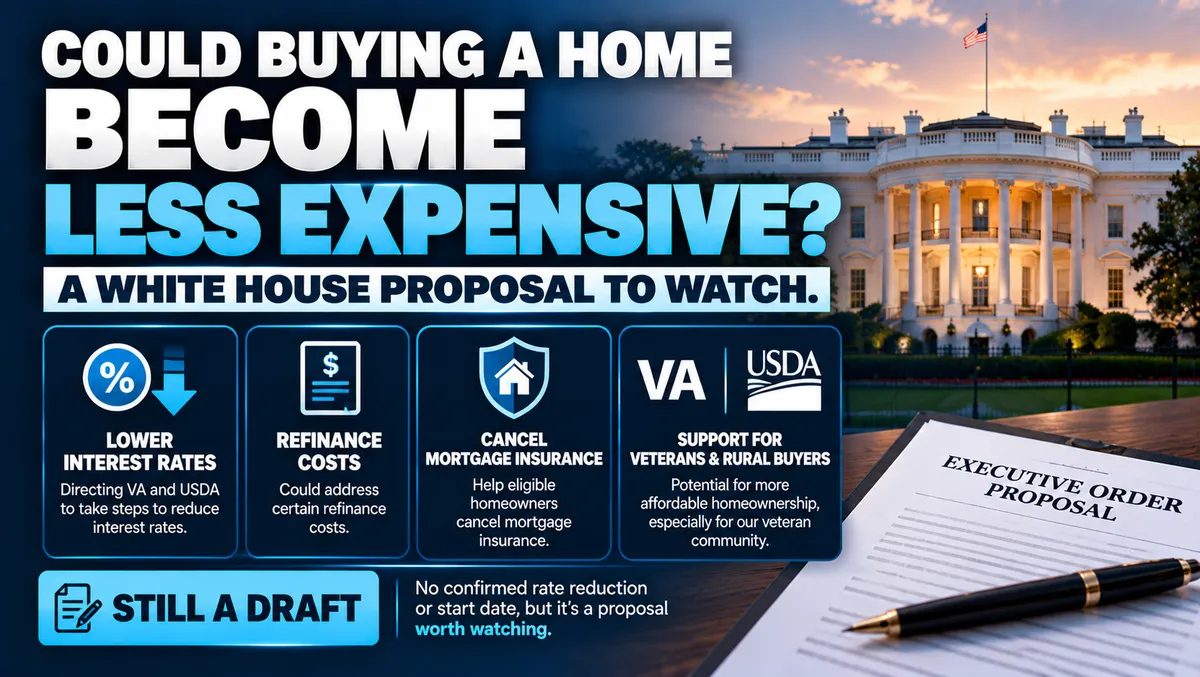
A policy proposal is circulating at the White House level that could affect mortgage costs in meaningful ways if it moves forward. Mark Clark wants buyers, homeowners, and especially veterans to understand what is being discussed, what is confirmed, and what the smart move is right now regardless of what happens with the proposal.
What the Proposal Reportedly Includes
The White House is reportedly considering an executive order aimed at lowering mortgage costs through several mechanisms. The proposal includes directing VA and USDA to take steps to reduce interest rates on loans within those programs. It may also address certain refinance costs and include provisions to help eligible homeowners cancel mortgage insurance earlier than current guidelines allow.
Those three elements together would represent meaningful relief for buyers using government-backed loan programs and for existing homeowners carrying mortgage insurance they may be able to exit sooner.
What Is Not Confirmed
This is still a draft. There is no confirmed rate reduction, no announced implementation date, and no guarantee the proposal moves forward in its current form or at all. Policy proposals at this stage change, narrow, expand, or disappear before they become actionable. Mark will provide updates as the situation develops.
What to Do Right Now Regardless of What Happens
The existence of a proposal that has not been finalized is not a reason to wait and see. It is a reason to prepare now so that if the proposal does move forward you are positioned to act immediately rather than scrambling to get ready after the fact.
Review your credit now. Understand your budget and what your current monthly payment capacity looks like. Get pre-approved so you know exactly where you stand and what you qualify for under current guidelines. If the proposal produces meaningful changes to VA or USDA rates or to mortgage insurance cancellation rules the buyers who are already prepared will be the first to benefit.
For the veteran community specifically this proposal is worth following closely given the VA loan component. Mark Clark will provide updates as the policy develops and what any confirmed changes actually mean for your situation in practical terms.
Contact Mark Clark to put a plan together and follow along for updates as this develops.
Sources
WhiteHouse.gov
VA.gov
ConsumerFinancialProtectionBureau.gov
MortgageNewsDaily.com
Investopedia.com

Mortgage Calculator
See your total mortgage payments using the tool below.
| Year | Interest | Principal | Balance |
|---|