Your Guide to VA Home Loan Benefits
Whether you’re a veteran, active-duty service member, or military family, get expert guidance from eligibility to closing and make the most of your VA benefits.
Meet The VA Loan Boss
Mark Clark is a civilian benefit and certified VA loan specialist . VA loans are incredibly powerful but also widely misunderstood. His job is to cut through bad advice, explain the rules clearly, and make sure veterans and active-duty service members actually receive the full benefit they’ve earned.Mark is known as the Veteran Mortgage Wingman here to serve, advocate, and help VA buyers avoid costly mistakes from contract to closing and beyond.
Whether you're a veteran purchasing your 3rd home on your VA benefit or PCSing and a first-time homebuyer, our team has you covered.
Education is central to how Mark does that, including teaching VA-focused classes for real estate professionals so VA buyers are better represented throughout the transaction.Outside of work, Mark is married, a proud father of six, and loves to play racquetball and pickleball.
Mark also serves as the the Board Chair for Genesis Joy House, Georgia’s only all-women Veteran homeless shelter because serving those who served doesn’t stop at the closing table.
The Home Loan Process
Mortgage Pre-Approval
Get pre-approved from one of our Loan Officers to see how much you can afford.
House Shopping
Work with a trusted Real Estate Agent to find a home you would like to move into.
Loan Application
Complete your home loan application to get the lending process started.
Don't take my word for it
Mortgage Programs
Experience the best mortgage experience located in Braselton, Georgia.
Home Loan Options
Our experienced mortgage advisors will walk you through the best mortgage loan program that will fit your specific scenario.
Conventional Home Loans.
FHA Home Loans.
USDA Home Loans.
VA Home Loans.
Frequently Asked Questions
How often can I refinance my mortgage?
There is no limit to the number of times you can refinance. However, you must qualify every time you apply and there will be costs associated with closing the loan each time.
Can I buy a home if I do not have money for a down payment?
Yes! There are a number of bond programs that offer low or no down payment financing options.
How do I know which mortgage is right for me?
The key to choosing the right mortgage is to understand the range of options and features available to you, as well as your budget, circumstances, and goals. Our licensed mortgage professionals are here to help you navigate that process. The more you know, the more comfortable and confident you will be choosing the best option for you and your family.
How long will the loan process take?
The Truth in Lending Act (TILA) does not permit a lender to close a loan until at least seven (7) business days have passed from the date your application was received. A typical home loan takes 30 days, as a number of third-party services such as appraisals, title work, and credit are required in conjunction with the mortgage process. Once you familiarize your Loan Officer with the details of your specific loan scenario, they will be able to provide you with a more specific timeline.
Will I qualify for a home loan?
The only way to find out is to speak with a qualified mortgage professional. Our Loan Officers have helped numerous clients who didn’t know if they could qualify to become home owners. We take the time to understand your financial situation and long-term financial goals, and then match you with the loan program that best fits your needs. Your approval for a loan may also largely depend on the price of the home you are financing. Getting pre-qualified prior to beginning your home search can give you an idea of what you may be able to afford.
Why do people refinance their mortgages?
Homeowners typically refinance to save money, either by obtaining a lower interest rate or by reducing the term of their loan. Refinancing is also a way to convert an adjustable loan to a fixed loan or to consolidate debts.
How much money will I have to pay upfront to buy a home?
This question does not have a simple, one-size-fits-all answer. The exact amount will depend on the price of the home you buy as well the type of mortgage financing you choose. Depending on your loan program, your down payment could be as much as 20% of the home’s price or as little as 3%, while some loans require no down payment at all.
Can I get a mortgage after bankruptcy?
You may still qualify for a home loan even if you have experienced a bankruptcy. The best way to find out if you qualify is to talk with a Loan Officer to discuss your options. Be sure to bring all paperwork regarding your bankruptcy so your Loan Officer can find the program that best fits your situation.
Should I lock my interest rate now, or wait until we are closer to our closing?
Interest rates fluctuate all day, every day. If an interest rate is good, it may be in your best interest to lock now. If you wait, you run the risk of an increase in rates later. If you are concerned that rates may go down after you lock, contact your Loan Officer to discuss your options. Some programs allow you to lock for an extended period and choose to lower your rate should a better one become available.
Most Recent Blog Updates
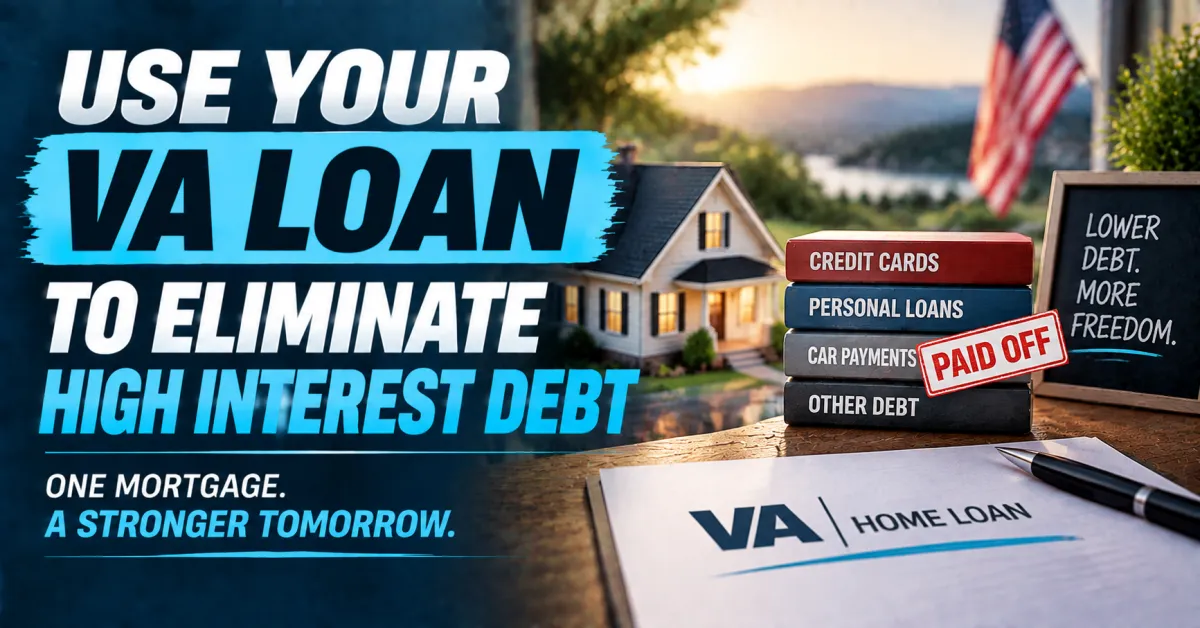
VA Cash Out Refinance Can Save Veterans Money Even When Moving to a Higher Mortgage Rate and Here Is Why
VA Cash Out Refinance Can Save Veterans Money Even When Moving to a Higher Mortgage Rate and Here Is Why
The VA Benefit That Can Change Your Monthly Cash Flow Even in a Higher Rate Environment
If you are eligible for the VA home loan benefit and you are carrying significant high-interest debt this conversation is specifically for you. The instinct to protect a low mortgage rate is understandable but it can cost veterans significantly more money every month when it prevents them from seeing the full financial picture.
The Objection That Sounds Smart and Sometimes Isn't
I have a four percent interest rate. I am never refinancing. Mark Clark hears this consistently and in many situations it is the right instinct. But not always and sometimes not even close.
Here is a real example. A client with a four percent mortgage rate had accumulated significant high-interest credit card debt. He refinanced with a VA cash-out refinance into a seven percent rate. That sounds like a step backward on the surface. The mortgage rate went up by three percentage points.
The net result was that he saved fourteen hundred dollars per month in total expenditures. The higher mortgage rate cost him more on the home loan. But eliminating all of the high-interest credit card payments produced a total monthly savings that dramatically exceeded that cost. His financial life improved by fourteen hundred dollars a month despite moving to a higher mortgage rate.
Why the Rate on the Mortgage Is Not the Only Number That Matters
Credit card interest rates frequently run between twenty and thirty percent annually. A balance that carries at that rate and generates a monthly minimum payment is costing significantly more per dollar of debt than a seven percent mortgage ever will. When you consolidate high-interest debt into a mortgage using a VA cash-out refinance you are replacing expensive debt with less expensive debt even when the mortgage rate is higher than it was before.
The math that matters is not the mortgage rate in isolation. It is the total monthly obligation across all debt and what happens to that number when high-interest balances are paid off through the refinance.
What the VA Cash-Out Refinance Actually Allows
Eligible veterans with equity in their current home can refinance using the VA cash-out program and use the proceeds to pay off high-interest debts. The result is one mortgage payment replacing what was previously a mortgage payment plus multiple credit card minimums plus other debt obligations. Whether that single payment is lower than the combined total of everything it replaces is the calculation worth running.
How to Know If It Makes Sense for You
Stop focusing exclusively on the interest rate on the home. Start looking at the complete monthly debt picture. If high-interest credit card debt or other obligations are a meaningful part of your monthly expenses the VA cash-out refinance may produce a net monthly savings that makes the conversation worth having regardless of where your current mortgage rate sits.
Reach out to Mark Clark and let him run the numbers for your specific situation to find out whether this strategy actually makes sense for you.
Sources
VA.gov
ConsumerFinancialProtectionBureau.gov
MortgageNewsDaily.com
MilitaryOneSource.mil
Investopedia.com

Mortgage Calculator
See your total mortgage payments using the tool below.
| Year | Interest | Principal | Balance |
|---|